Workout Snacks: The 5-Minute Fitness Trend Replacing the Gym Grind
Workout snacks are the viral 5-minute fitness trend replacing the gym grind. See what they are, why they work, and how to start today.
Read in
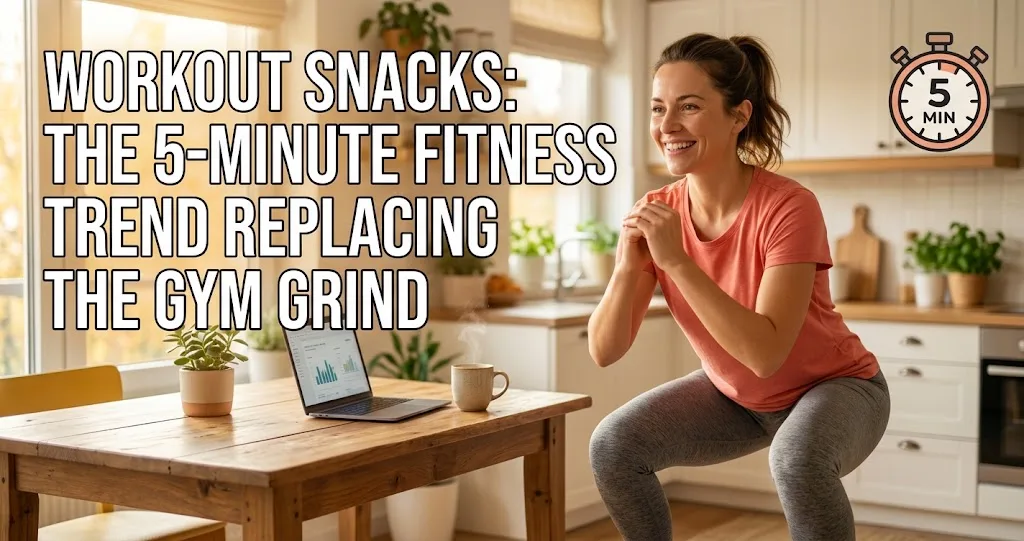
Quick Answer: Workout snacks are short bursts of exercise — usually 2 to 10 minutes — done a few times throughout the day instead of one long gym session. Think a set of squats before lunch, a quick stair climb between meetings, or push-ups while your coffee brews. Research shows these small bursts add up to real fitness gains, and for most people, they're far easier to actually stick with than a 60-minute workout block.
Ever plan to hit the gym after work, and then just... don't? Life gets in the way, energy runs out, and the whole workout gets skipped entirely.
That all-or-nothing mindset is exactly what workout snacks are designed to break. Instead of needing a full hour and a gym bag, you fit in small bursts of movement throughout your day — no special clothes, no commute, no excuse.
It's quickly becoming one of the most talked-about fitness trends of 2026, and honestly, it makes a lot of sense once you understand why it works.
What Are Workout Snacks, Exactly?
In-content ad slot300 × 250 / responsive
A workout snack is a short, focused burst of physical activity — usually somewhere between two and ten minutes — done on its own, separate from a full workout session.
Instead of one long block of exercise, you spread several of these mini-sessions across your day. A set of squats before breakfast, a quick walk up a few flights of stairs, twenty push-ups between emails — each one counts on its own.
The idea behind 5-minute exercise snacks isn't to replace serious training entirely. It's to make movement so low-effort to start that skipping it stops being the easy option.
Why Workout Snacks Are Having a Moment
This isn't just a passing trend — it taps into something a lot of people have been struggling with for years.
• It removes the biggest barrier: time. Not everyone can find sixty free minutes, but almost everyone can find five.
• It works with a busy schedule, not against it. You don't need to rearrange your whole day around one workout block.
• Consistency matters more than intensity. Several short bursts across the week often add up to real, measurable fitness improvements.
• It lowers the mental barrier to starting. A five-minute commitment feels far less intimidating than "going to the gym."
• It fits naturally into existing routines. Waiting for coffee to brew or a meeting to start becomes a built-in workout window.
The appeal isn't that it's easier exercise — it's that it's exercise you'll actually do.
How to Start Doing Workout Snacks: Step by Step
Here's a simple way to build this habit without overhauling your entire day.
Step 1: Pick Three Natural Pause Points in Your Day
Look for moments that already happen daily — brewing coffee, waiting for a video call to start, between meetings. These become your built-in workout snack windows.
Step 2: Choose One Simple Movement Per Window
Keep it dead simple: squats, push-ups, a quick walk, or a wall sit. You don't need equipment or a plan — just one movement you can do anywhere.
Step 3: Set a Timer for 2 to 5 Minutes
Short enough to never feel like a big commitment, but long enough to actually get your heart rate up. A timer keeps it from turning into an excuse to skip entirely.
Step 4: Stack It Onto an Existing Habit
Attach the workout snack to something you already do daily — right after you brush your teeth, right before you open your laptop. This makes it far easier to remember.
Step 5: Track It Loosely, Not Obsessively
A simple checkmark on a calendar or note on your phone is enough. The goal is building the habit, not turning it into another source of pressure.
If mornings already feel packed, pairing this with the ideas in our [7-day digital detox challenge](https://blogslet.site/lifestyle/the-7-day-digital-detox-challenge-even-if-you-cant-put-your-phone-down) can free up more natural pause points throughout your day too.
Real Benefits of Workout Snacks
These small bursts add up to changes people notice fairly quickly.
• More consistent movement overall, even on your busiest days.
• Less mental resistance to exercising, since five minutes feels achievable, not overwhelming.
• Better energy throughout the day, especially compared to sitting for long, uninterrupted stretches.
• A realistic entry point for beginners, without the intimidation of a full gym routine.
• Easier to maintain long-term, since it doesn't demand a big schedule change to keep going.
• Improved mood, thanks to the natural endorphin boost from even short bursts of movement.
Common Mistakes People Make With Workout Snacks
Most people don't struggle because the concept is hard — they trip up on a few small habits.
Mistake 1: Trying to Do Too Much Too Soon
Jumping straight into five or six workout snacks a day usually leads to burnout within a week.
Fix: Start with just one or two a day, and add more once the habit actually sticks.
Mistake 2: Treating It as a Replacement for All Exercise
Workout snacks are a great addition, but they're not automatically a full substitute for strength training or cardio for everyone's goals.
Fix: Use workout snacks to build consistency, and layer in longer sessions when your schedule allows.
Mistake 3: Not Actually Scheduling Them
Vague plans like "I'll fit some in during the day" rarely turn into a consistent habit.
Fix: Attach each workout snack to a specific daily trigger, not just good intentions.
Mistake 4: Skipping One and Giving Up Entirely
Missing a single workout snack can feel like failing the whole day, which discourages people from continuing.
Fix: Treat each one independently — missing one doesn't cancel out the ones you did.
Workout Snacks vs. Traditional Workouts
Factor
Workout Snacks
Traditional Workout
Time commitment
2–10 minutes
30–60+ minutes
Barrier to start
Very low
Moderate to high
Consistency
Easier to maintain daily
Easier to skip when busy
Best for
Busy schedules, beginners
Structured training goals
Equipment needed
Usually none
Often gym or equipment
Pro Tips to Make Workout Snacks Actually Stick
• Keep a running list of go-to movements so you're never deciding what to do in the moment.
• Use existing daily triggers — a kettle boiling, a load of laundry finishing — as natural reminders.
• Mix it up weekly so it doesn't start to feel repetitive or boring.
• Don't worry about "counting" toward a formal workout — the goal is movement, not a perfect log.
• Pair it with music or a podcast you enjoy to make the minutes feel shorter.
• Celebrate small wins — a full week of workout snacks is a genuine accomplishment, not a consolation prize.
Frequently Asked Questions
Do workout snacks actually make a real fitness difference?
Yes, several short bursts of activity throughout the day can meaningfully improve cardiovascular health and overall fitness, especially for people who otherwise wouldn't exercise at all. Consistency across the week tends to matter more than any single session's length.
How many workout snacks should I do per day?
There's no fixed number, but starting with two or three short sessions a day is a realistic and sustainable place to begin. You can build up from there as the habit becomes more natural.
Can workout snacks replace a gym routine completely?
For general movement and consistency, they can be a strong foundation, but specific goals like building significant strength may still benefit from structured training. Many people use workout snacks alongside occasional longer sessions rather than as a full replacement.
What are some easy workout snack ideas for beginners?
Simple options include a set of squats, push-ups against a counter, a quick walk around the block, or a minute of jumping jacks. The best workout snack is whichever one you'll actually do without overthinking it.
Do I need any equipment for workout snacks?
No, most workout snacks use just your body weight and require no equipment at all. This is part of what makes them so easy to fit into a busy day.
Is this trend backed by real research, or is it just a social media fad?
There's genuine research behind the benefits of short, frequent bursts of activity, particularly for people who struggle to fit in longer structured workouts. It's gained popularity partly because it reflects a real, practical shift toward sustainable habits over extreme routines.
Final Thoughts: Small Bursts, Real Results
Workout snacks aren't about doing less — they're about making movement so simple to start that it actually happens, day after day.
Pick just one small window in your day today — right after you wake up, right before lunch — and try a two-minute burst of movement. That's genuinely enough to begin.
Some movement, done consistently, beats a perfect workout plan you never quite get around to starting.
Keep reading