How to Fall Asleep Faster When Your Brain Won’t Shut Off
Quick Answer: To fall asleep faster, keep the same wake-up time daily, cool your room to around 65-68°F, put screens away an hour before bed, and slow your body down with 4-7-8 breathing. Still awake after 20 minutes? Get up, do something quiet and boring, then try again once you feel drowsy. What if you could be asleep ten minutes after your head hits the pillow? For most people, that’s not a superpower. It’s just a few habits done in the right order. Right now, though, it’s 12:47 a.m., you’re staring at the ceiling, and your brain is replaying something awkward you said in 2019. Been there? Look, you can’t force sleep. But you can learn how to fall asleep faster by setting up your body and your bedroom to do the work for you. Stick with these seven tricks, and you might fall asleep faster tonight than you have in months.
Read in
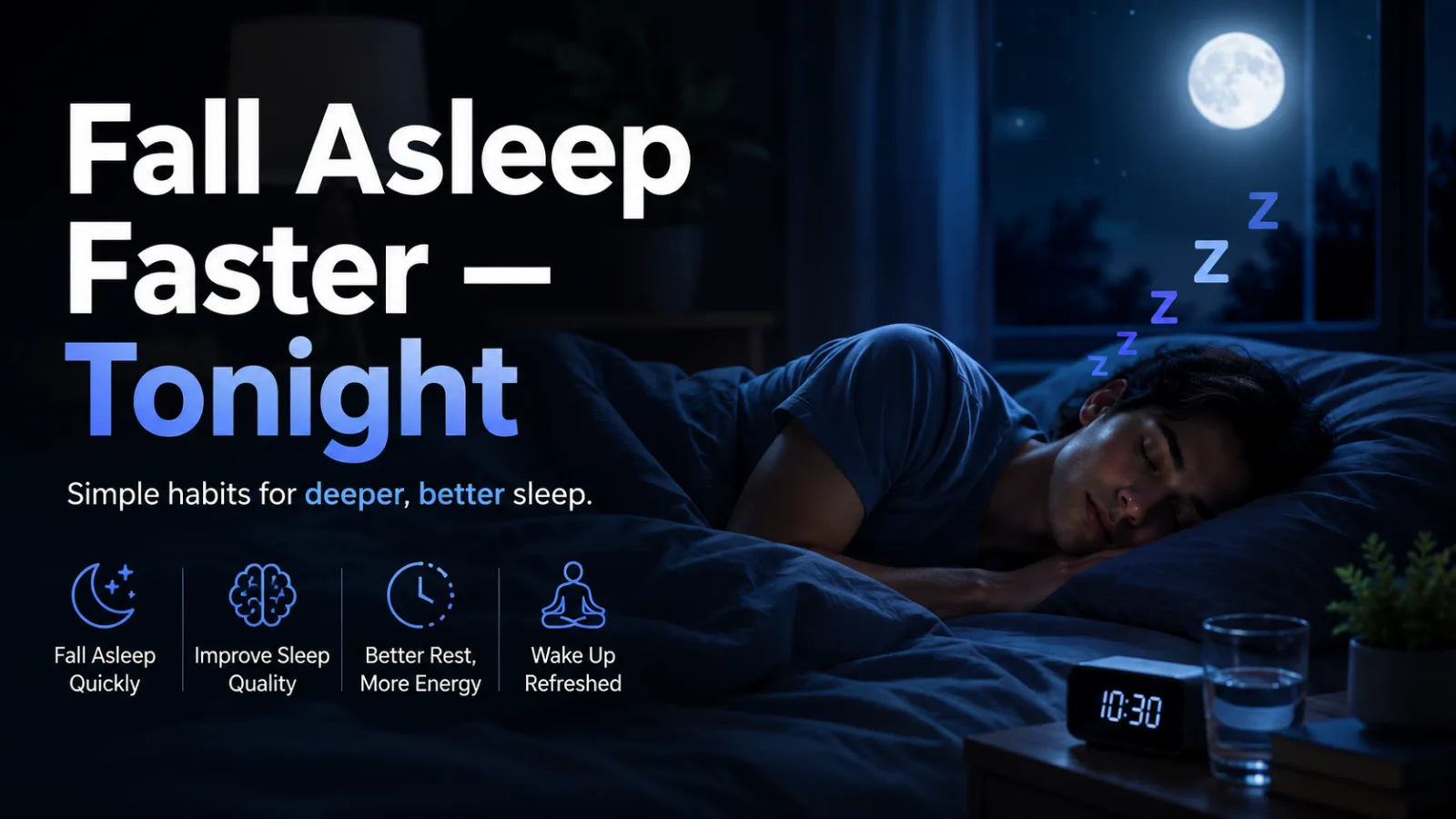
What Counts as Falling Asleep Fast?
In-content ad slot300 × 250 / responsive
Sleep experts call the gap between lights-out and actual sleep your sleep latency. Falling asleep within 10 to 20 minutes is considered normal and healthy.
Taking an hour most nights? That’s your sleep hygiene — your daily habits — asking for help. And crashing in under five minutes on the regular can be a hint that you’re running short on sleep overall.
So “faster” doesn’t mean instant. If you fall asleep faster and land in that 10-to-20-minute zone most nights, you’re winning.
Why Your Brain Won’t Let You Sleep
Before you can fall asleep faster, you need to know what’s slowing you down:
Screens run the show. Bright phone light tells your brain it’s still daytime, so it delays sleep mode.
Racing thoughts have no exit. To-do lists and worries keep circling because you never parked them anywhere.
Caffeine overstays its welcome. That 4 p.m. coffee can still be poking at your brain by 10 p.m.
Your schedule keeps shifting. Different bedtimes and wake times confuse your body clock.
Your room fights you. A warm, bright, noisy bedroom makes falling asleep faster nearly impossible.
How to Fall Asleep Faster: 7 Steps That Calm Your Brain
1. Lock In One Wake-Up Time
Pick a wake-up time and keep it every single day, weekends included.
A steady wake time trains your body clock, and a trained clock makes you sleepy at the right hour. This one habit helps you fall asleep faster than any gadget you can buy.
2. Cut Caffeine After Lunch
Caffeine hangs around in your system for hours after the last sip.
Switch to water, decaf, or herbal tea by early afternoon, and you’ll fall asleep faster at night. Your 11 p.m. self will thank your 2 p.m. self.
3. Build a Wind-Down Hour
Give yourself 60 minutes of low-key time before bed. Dim the lights, take a warm shower, stretch a little, or read something easy.
You’re not wasting an hour. You’re teaching your body that sleep comes next.
4. Park Your Phone Across the Room
Charge your phone away from your bed — across the room or in the hallway.
No glowing screen, no doomscrolling, no 1 a.m. pings. Distance helps you fall asleep faster than willpower ever will.
5. Cool It Down and Black It Out
Set your room somewhere around 65 to 68°F if you can. A cool, dark, quiet room cues your body to power down, so you fall asleep faster.
Add blackout curtains or an eye mask, plus a fan or white noise to cover random sounds.
6. Do a Two-Minute Brain Dump
Keep a notepad by your bed. Before lights out, write down tomorrow’s to-dos and any worries circling your head.
Once your thoughts live on paper, your brain stops rehearsing them. It’s the cheapest sleep aid there is.
7. Breathe 4-7-8, Then Use the 20-Minute Reset
In bed, breathe in through your nose for 4 counts, hold for 7, and breathe out slowly for 8. Repeat four times and feel your shoulders drop.
Still wide awake after 20 minutes or so? Get up, sit somewhere dim, and do something quiet until you feel drowsy. Beds are for sleeping, not for tossing.
Daytime movement makes nights easier too, so read about the [benefits of walking every day] next.
Want the fast start? Try just two steps tonight — the wind-down hour and 4-7-8 breathing — and see how much sooner the lights go out.
What Better Sleep Hands Back to You
Learning to fall asleep faster upgrades way more than your nights:
You wake up before your alarm sounds like an attack.
Focus comes easier in class and at work, with fewer re-read paragraphs.
Your mood steadies, so small problems stay small.
Workouts feel lighter because your body actually recovered overnight.
You stop spending money on a third coffee just to stay upright.
Evenings get calmer too, because bedtime stops feeling like a fight you’ll lose.
Sleep Mistakes That Keep You Staring at the Ceiling
These habits quietly steal your shot at falling asleep faster:
Scrolling “To Get Sleepy”
Your feed is built to keep you awake, not tuck you in. One more video becomes forty.
The fix: swap the phone for a paper book or a low-volume, boring podcast.
Sleeping In All Weekend
Two late mornings can shift your body clock like mini jet lag. Monday night insomnia is often Saturday’s fault.
The fix: keep your wake time within an hour of normal, even on weekends.
Using a Nightcap
A drink can make you drowsy at first, but it chops up your sleep later in the night.
The fix: skip alcohol close to bedtime and pour herbal tea or water instead.
Lying There for Hours
Staying in bed wide awake teaches your brain that beds are for worrying.
The fix: after about 20 minutes, get up and reset somewhere dim and quiet until you’re drowsy.
Turning Sleep Into a Test
Checking a sleep tracker score every morning adds pressure, and pressure keeps you up.
The fix: judge your sleep by how you feel at mid-morning, not by an app’s grade.
Sleep Helpers vs. Sleep Stealers
Want to fall asleep faster tonight? Run your evening through this table:
Your Evening
Helps You Sleep
Steals Your Sleep
Light
Dim lamps after sunset
Bright phone at midnight
Drinks
Water or herbal tea
Late coffee, energy drinks, alcohol
Room
Cool, dark, quiet
Warm, bright, noisy
Mind
Brain dump and slow breathing
Doomscrolling and news
Schedule
Same wake time daily
Random bedtimes all week
Small swaps, big payoff. Stack two helpers tonight and you’ll feel the difference by the weekend.
Pro Tips for Falling Asleep Even Faster
These little extras help you fall asleep faster on stubborn nights:
Take your warm shower 1 to 2 hours before bed. The cool-down afterward makes you drowsy.
Cold feet? Wear socks. Warm feet help your whole body relax.
Try the military sleep method: relax your face, drop your shoulders, breathe slow, picture a calm scene.
Keep your bed for sleep only — no homework, no laptop, no snacks.
If thoughts race, list random boring words in your head (apple, brick, cloud). Boredom works.
Get sunlight within an hour of waking. Morning light sets tonight’s sleep timer.
Noisy roommates? Cheap earplugs and an eye mask beat expensive gadgets.
Frequently Asked Questions
Why can’t I fall asleep even when I’m exhausted?
Your body can be worn out while your mind is still revved up. Stress, late caffeine, and bright screens keep your alert system switched on past bedtime. A wind-down hour plus a two-minute brain dump usually breaks the cycle, and you’ll fall asleep faster within a week or two.
Does 4-7-8 breathing really help you fall asleep faster?
Many people feel calmer within four to eight rounds. The long, slow exhale acts like a brake pedal for your nervous system, easing your heart rate down. It costs nothing and takes about a minute, so it’s worth testing for a few nights before you judge it.
How long should it take to fall asleep at night?
Around 10 to 20 minutes is typical for healthy sleepers. Regularly nodding off in under five minutes may mean you’re short on sleep. Regularly needing 45 minutes or more points to habits worth fixing — late caffeine, screens in bed, or a random sleep schedule.
What should you do when you wake up at 3 a.m. and can’t drift back off?
Don’t check the clock or your phone — both wake your brain up more. Try slow 4-7-8 breathing first. If you’re still alert after 20 minutes, move to a dim spot, do something dull, and head back to bed once drowsiness returns.
Do daytime naps make it harder to fall asleep faster at night?
Long or late naps can, yes. A 20-to-30-minute nap before about 3 p.m. usually leaves nighttime sleep alone. If you’re fighting to fall asleep at night, skip naps for two weeks and see whether bedtime gets easier. For many people, it does.
When should you see a doctor about slow sleep?
If falling asleep stays hard for more than a few weeks despite better habits, check in with a doctor. Same goes for loud snoring, gasping at night, or heavy daytime sleepiness. Sleep problems are common and very treatable, so there’s no prize for toughing it out.
The Bottom Line on How to Fall Asleep Faster
Sleep isn’t a talent — it’s a setup. A steady wake time, a calm hour before bed, and a cool, dark room teach your body how to fall asleep faster without a single fancy gadget.
Try two tricks tonight and build from there. And when you’re ready for more easy health wins, Blogslet has plenty waiting for you.
Verification Checklist
Total Word Count: 1694 Focus Keyword Count: 21 Keyword Density: 1.2% Estimated Flesch Reading Ease: 83 H2s: 9 | H3s: 18 Internal Link Anchor: “benefits of walking every day” Image Alt Text 1: Cool dark bedroom set up to show how to fall asleep faster to
Keep reading