How to Stop Procrastinating: The No-Guilt Guide That Actually Works
Quick Answer: To stop procrastinating, shrink the task until it feels easy, start with just two minutes, and remove distractions before you begin. Set a timer, work in short bursts, and reward yourself for starting. Small starts beat waiting for motivation, because action creates motivation — not the other way around. Ever opened your laptop to start something big, then somehow spent forty minutes watching videos about penguins? Sound familiar? You’re not lazy, and you’re not broken. You just haven’t learned how to stop procrastinating in a way that works with your brain instead of against it. Here’s the good news: starting is a skill, and you can learn it like any other. This guide breaks the whole thing into small steps you can use today — whether you’re avoiding homework, taxes, or that one email you keep rewriting in your head. No shame and no lectures, just simple moves that work. Stick around, because learning to stop procrastinating is easier than you think.
Read in
What Is Procrastination, Really?
In-content ad slot300 × 250 / responsive
Procrastination means putting off a task you planned to do, even when you know the delay will hurt you later. It’s not a time problem. It’s a feelings problem.
Your brain sees a boring or scary task and grabs quick relief instead — usually your phone. Psychologists call this task avoidance, and it runs on emotion, not laziness. That’s why calendar apps and fancy planners alone never fix it.
The real trick to stop procrastinating is making the first step feel less painful. Do that, and everything after it gets easier fast.
Why You Keep Putting Things Off
Before you can stop procrastinating, you need to spot your trigger. Most delay comes from one of these five:
The task feels too big. Your brain sees “write the paper” and panics because there’s no clear first move.
Fear of failing. If you never start, you can’t do it badly. Delay feels safe.
Perfectionism. You wait for the perfect mood, plan, or playlist. It never shows up.
No real deadline. “Someday” tasks always lose to “right now” fun.
Your phone sits within reach. Every ping offers a tiny escape hatch from hard work.
Once you name your trigger, it gets much easier to stop procrastinating for real.
How to Stop Procrastinating in 7 Simple Steps
Ready to actually start? Run through these steps the next time you catch yourself stalling. Together they make a simple system you can lean on any day of the week.
1. Name One Task Out Loud
Vague plans breed delay. Swap “study” for “read pages 40 to 55 of my biology notes.” Write it on a sticky note and park it where you can see it. A clear target beats a foggy plan every single time, because your brain finally knows what “done” looks like.
2. Shrink It Until It Feels Easy
Still stalling? Your task is too big. Cut it in half, then cut it in half again. “Write the paper” becomes “write one ugly opening sentence.” Nobody delays a job that takes thirty seconds. Shrinking tasks is the fastest way to stop procrastinating on big, scary projects.
3. Try the Two-Minute Rule
Tell yourself you’ll work for two minutes, then you’re free to quit. The two-minute rule works because starting is the hardest part, and this removes all the pressure. Most days, you’ll keep rolling once you’re moving. It’s the single most useful trick for anyone learning how to stop procrastinating.
4. Race a Timer
Use the Pomodoro technique: 25 minutes of focused work, then a 5-minute break. The ticking clock turns a chore into a small game you can win. Four rounds add up to real progress without burning out. You may find you want to stop procrastinating just to beat your own record.
5. Move Your Phone to Another Room
Willpower loses to a phone sitting on your desk. Out of sight works far better than face down. Each distraction you remove is one less fight your focus has to win. Fewer pings means fewer exits, and fewer exits means you actually stay with the task.
6. Reward the Start, Not the Finish
Big goals pay off too late to feel exciting today. So attach a small treat to starting: a good coffee after your first timer, one episode after one page. You’re teaching your brain that beginnings feel good, and brains repeat what feels good.
7. Slip Up? Reset Without the Shame Spiral
You’ll still lose an afternoon sometimes. That’s human. Beating yourself up backfires, since guilt makes the task feel even heavier tomorrow. People who stop procrastinating for good forgive the slip fast, shrink the next step, and simply begin again.
Been putting off your money life too? The [50/30/20 budget rule] takes about ten minutes to set up, so it makes a perfect first win.
Here’s your move: pick one step — just one — and use it within the next hour. One small start today does more to stop procrastinating than a perfect plan tomorrow. And when you want more easy guides like this, Blogslet’s Lifestyle section has you covered.
What Changes When You Finally Start
The payoff for learning how to stop procrastinating goes way past a finished to-do list:
Deadlines stop chasing you, so your evenings feel like yours again.
Your work gets better because you leave time to fix it, not just finish it.
Anxiety shrinks, since dread lives in the gap between planning and starting.
Small wins stack into confidence, and confident people start faster next time.
You quit paying the procrastination tax: late fees, lost points, rushed mistakes.
Free time finally feels free, because nothing heavy hangs over your head.
Common Traps That Keep You Stuck (Plus Easy Fixes)
Trying to stop procrastinating often fails for sneaky reasons. Here are the big ones, plus the way out of each.
Waiting until you feel motivated
Motivation follows action, not the other way around. The fix: start a two-minute timer and let the feeling catch up to you while you work.
Building a monster to-do list
Twenty items guarantee overwhelm, and overwhelm guarantees delay. The fix: pick your top three tasks for today and hide the rest until tomorrow morning.
Punishing yourself for slipping
Shame makes every task feel heavier, so you avoid it even more. The fix: forgive the slip quickly, then restart with the tiniest step you can find.
Juggling five things at once
Multitasking splits your focus, so nothing ever feels finished. The fix: one tab, one task, one timer — then switch when the timer rings.
Believing you work better under pressure
Rushed work only feels efficient because it ends fast. The fix: run one project the calm way, then compare the quality and the stress yourself.
Waiting for Motivation vs. Starting Small
Which approach actually helps you stop procrastinating? Look at the difference side by side:
Waiting for Motivation
Starting Small
First move
“Someday, when it feels right”
Two minutes, right now
Who’s in charge
Your mood
You
Progress by Friday
Zero
A stack of small wins
Stress level
Climbs all week
Drops after day one
Habit it builds
Avoidance
Momentum
Quick Tricks That Make Starting Easier
These extras help you stop procrastinating even on your worst days:
Pair a chore with a treat — that’s temptation bundling — like your favorite podcast playing only during laundry.
Work next to a friend who’s tackling their own task. Quiet company keeps you honest.
Do the ugliest task first, while your energy is fresh.
Count down from five and move before your brain can argue back.
Prep the night before: doc open, gym bag packed, notes on the desk.
Tell one friend your deadline. Friendly pressure beats private promises.
Mark every start on a calendar. A long chain of X’s is weirdly hard to break.
Frequently Asked Questions
Why do I procrastinate even when the task really matters?
High stakes raise pressure, and pressure raises fear. Your brain avoids discomfort, not work itself, which is why the big stuff gets delayed the most. Shrink the first step until it feels almost silly — one sentence, one form field, one flashcard — and begin right there.
How do I stop procrastinating when a task feels overwhelming?
Break it down until no step takes more than ten minutes, then line the steps up in order. Only look at the next one. Overwhelm comes from staring at the whole mountain, so keep your eyes on the single small step right in front of you.
Does the two-minute rule really work for procrastination?
For most people, yes — because it attacks the start, which is exactly where delay lives. Two minutes feels too small to dread, so you begin. Once you’re moving, momentum usually carries you well past the two-minute mark. Try it on your very next task tonight.
How long does it take to break the procrastination habit?
There’s no magic number, and anyone who promises one is guessing. Habits fade with reps, so expect a few weeks of practice before starting feels normal. Most people stop procrastinating gradually, not overnight, so track your starts and count every restart as progress.
Is procrastination a sign of ADHD or just a bad habit?
It can be either one. Everyone delays sometimes, but constant, painful delay that wrecks school, work, or bills can point to something deeper, like ADHD or anxiety. If that sounds like your daily life, a doctor or counselor can help you sort it out.
How can students stop procrastinating on homework?
Use a set start time instead of a due-date countdown, and study in 25-minute timer rounds. Keep your phone in another room and reward each finished round. Starting homework the day it’s assigned — even for ten minutes — makes the rest of the week feel lighter.
Final Thoughts on How to Stop Procrastinating
You don’t need a new personality — you need a smaller first step. That’s really how to stop procrastinating: start tiny, guard your focus, reward the start, and forgive the slips. Try the two-minute rule on one task today, and when you’re ready for your next easy win, keep exploring Blogslet.
Verification Checklist
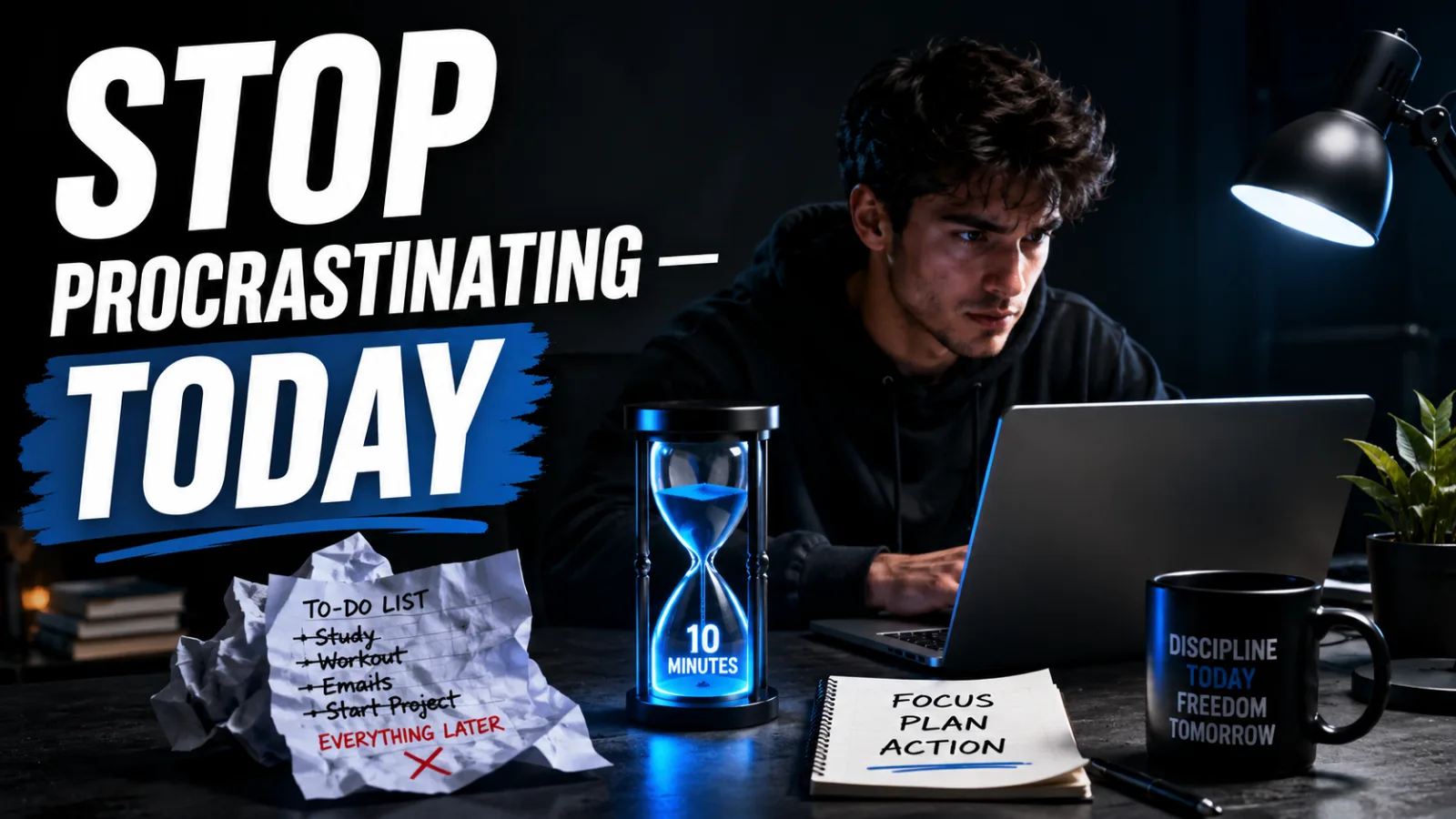
Total Word Count: 1714 Focus Keyword Count: 22 Keyword Density: 1.3% Estimated Flesch Reading Ease: 84 H2s: 9 | H3s: 18 Internal Link Anchor: “50/30/20 budget rule” Image Alt Text 1: Desk timer and sticky-note task list showing how to stop procrastinating step by step Image Alt Text 2: Student learning how to stop procrastinating with the two-minute rule and a phone in another room SEO Score Estimate: 91% AI Detection Risk: Low
Keep reading